
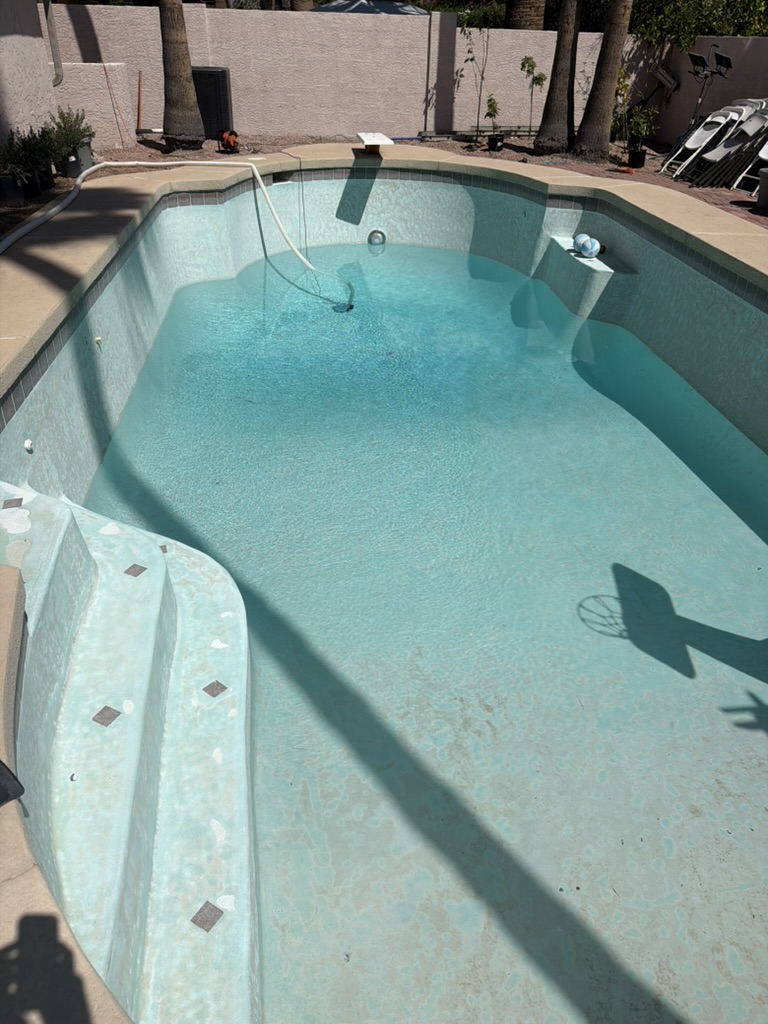
Your pool’s next step
A rough spot on a step, a patch of discoloration or a tired-looking waterline can all prompt the same question: Does this pool need resurfacing? A photo may help start the conversation, but the answer depends on what is happening across the surface and what is underneath it.
If you are planning work for the cooler part of the year in Phoenix or Scottsdale, start by documenting the concerns and asking for an on-site assessment. That gives you a useful scope to compare before choosing a finish or a project date.
Describe the condition before choosing the solution
Look across the interior and note where you see changes: floor, walls, steps, benches and waterline. Is the concern isolated or widespread? Is it visual, rough to the touch, or changing over time? Have there been previous patches or recurring water loss? Do not scrape, chip or drain the pool to investigate. Share dated photos and the maintenance history with the professional assessing it.
The assessment should separate surface appearance from other possible problems. A cosmetic change, a local repair and a full resurfacing project can have very different scopes. It is reasonable to ask what observations support the proposed work and what remains uncertain until the pool is inspected.
Ask what the written scope includes
For a resurfacing proposal, ask what will happen to the existing finish, how the underlying surface will be prepared, whether waterline tile or steps are included, what finish is specified, and how startup and handoff will work. Also ask who handles draining, permits or other site-specific requirements. A single price without a defined scope makes comparisons difficult.
Haoly Pools' resurfacing project story shows a real pool from worn interior through chip-out, preparation, waterline work, new finish and refilling. It illustrates one completed project; it does not establish the right work for every pool.
Plan around your own pool and calendar
The timing of a project depends on the pool's condition, agreed scope, material availability, site access and the contractor's schedule. Cooler-season planning can give you time to understand options before the next stretch of frequent swimming, but a specific completion date belongs in the project discussion, not in a general blog promise.
Tell Haoly Pools what is bothering you about the surface and what you would like to change. An assessment can determine whether a focused repair, resurfacing or another next step makes sense.
Can a photo tell me whether my pool needs resurfacing?
A photo helps locate and describe a concern. It usually cannot establish the condition beneath the finish or the complete scope. An on-site assessment is the next step.
Does discoloration always mean the finish must be replaced?
No single visual symptom proves the remedy. Ask a professional to evaluate the pattern, condition and history before selecting work.
Should I pick a finish before getting an assessment?
Bring examples of the appearance and feel you like. First establish the pool's condition and the written scope, then compare finish choices that fit that project.
Updated
Sources & further reading
Have a question about this article? Contact the editorial team.
Our editorial approach