
Your pool’s next step
If your pool’s interior is worn, resurfacing can involve several stages. These two Haoly Pools projects show the work behind a finished pool and give you useful questions to ask about your own proposal.
Follow one project from the worn finish through removal, preparation, tile work and the filled result, then compare a separate pool before and after resurfacing. Ask which stages belong in the proposal for your pool.
Start with the condition and a written scope
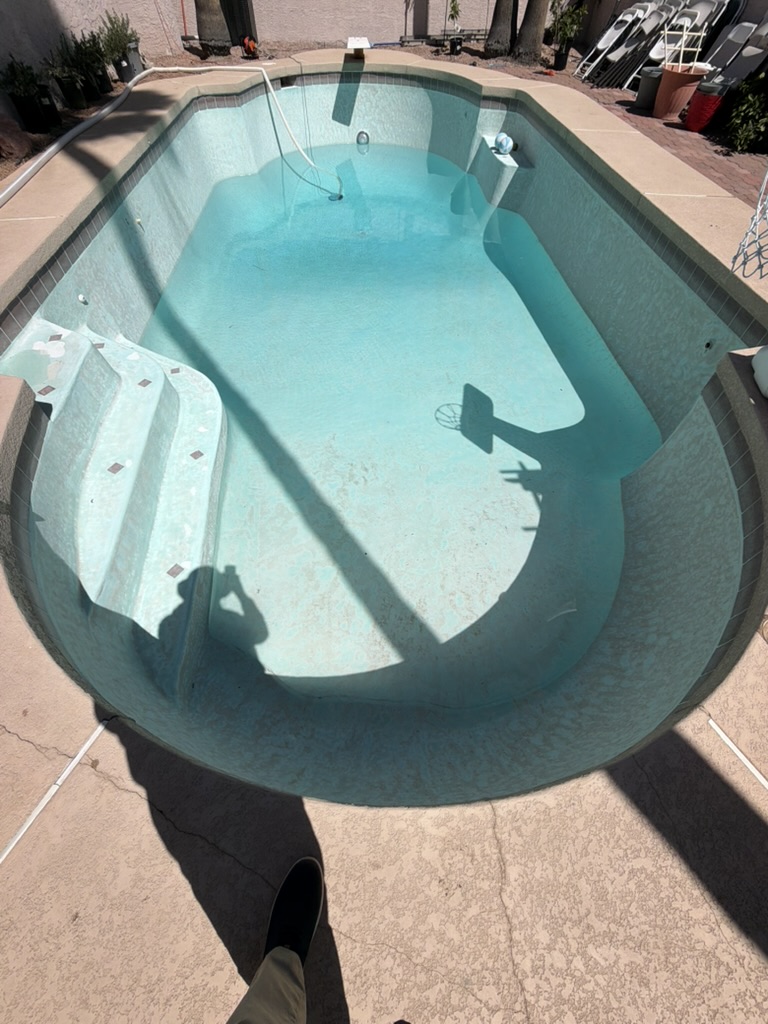
In the first project, the starting photos show a drained pool with a worn pale-aqua interior and a closer view around the steps. Those images document this pool's appearance before work. A similar-looking patch in another pool might call for a different assessment.
Before work begins, ask what condition the contractor observed, what removal and preparation the proposal includes, and which areas—steps, benches, waterline tile and surrounding surfaces—are in scope. If you are still deciding whether a local repair or broader project makes sense, begin with our resurfacing-or-repair guide.
See the old finish come out
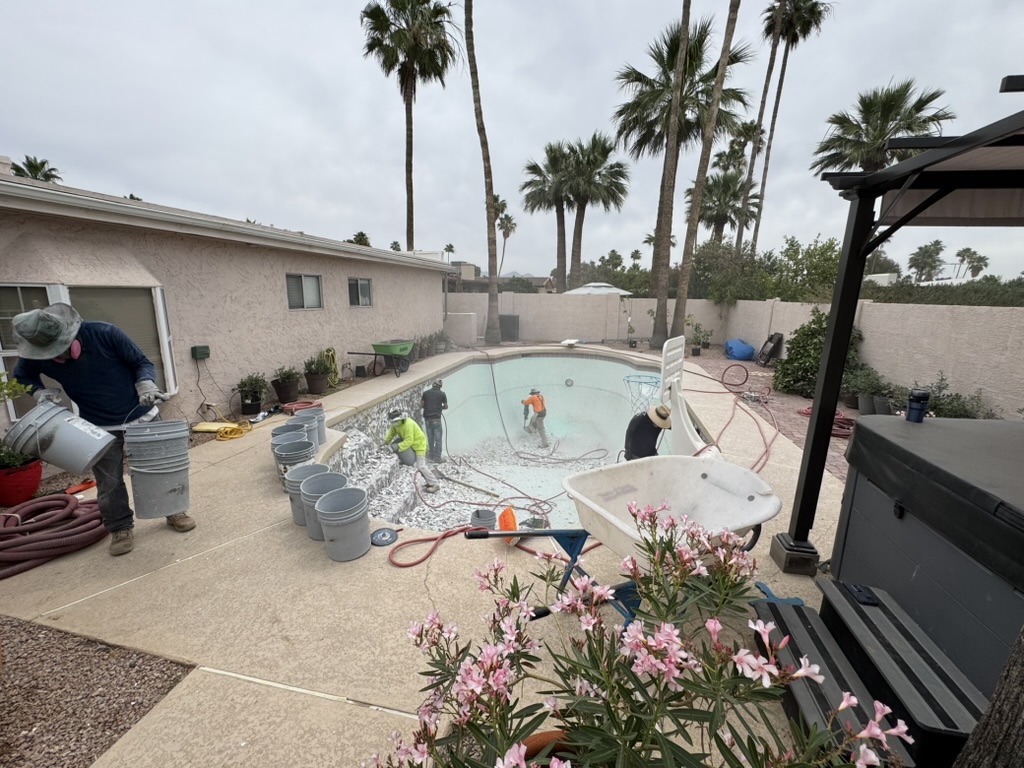
The wide work photo shows the crew chipping out the old interior finish. Rubble in the drained pool, buckets, hoses and a wheelbarrow show the scale of removal on this project.
Ask how the proposed removal method relates to your pool's existing finish and condition. Your written scope should also explain site access, protection and disposal, rather than leaving those details to a general photo sequence.
Look at preparation and waterline work
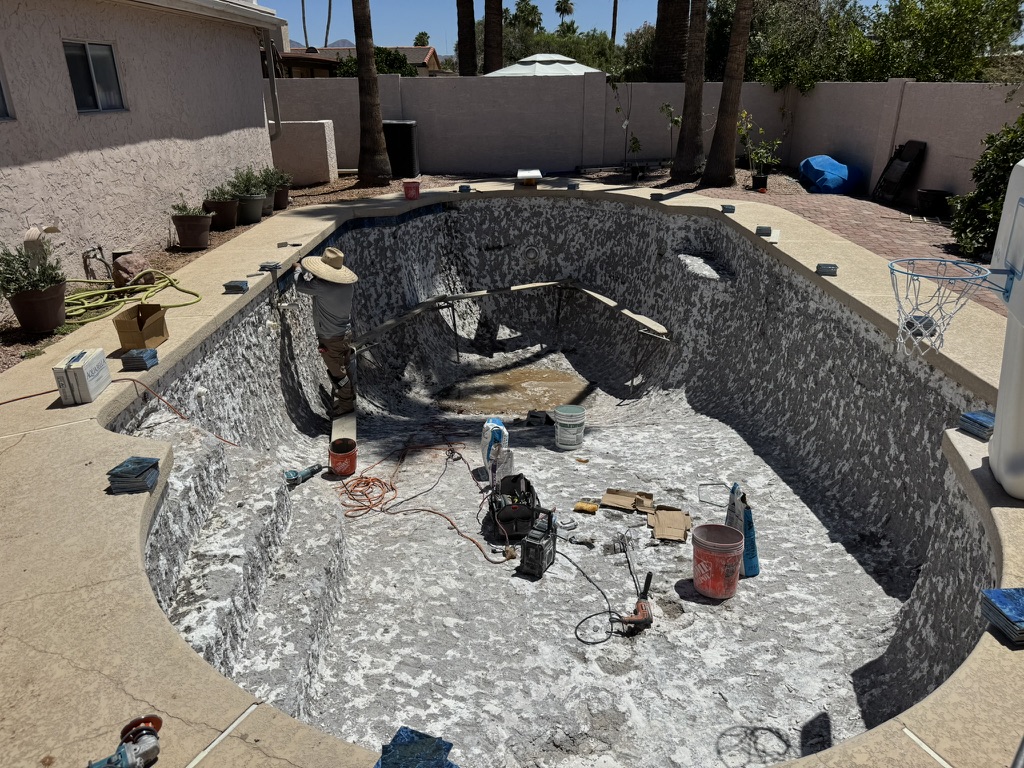
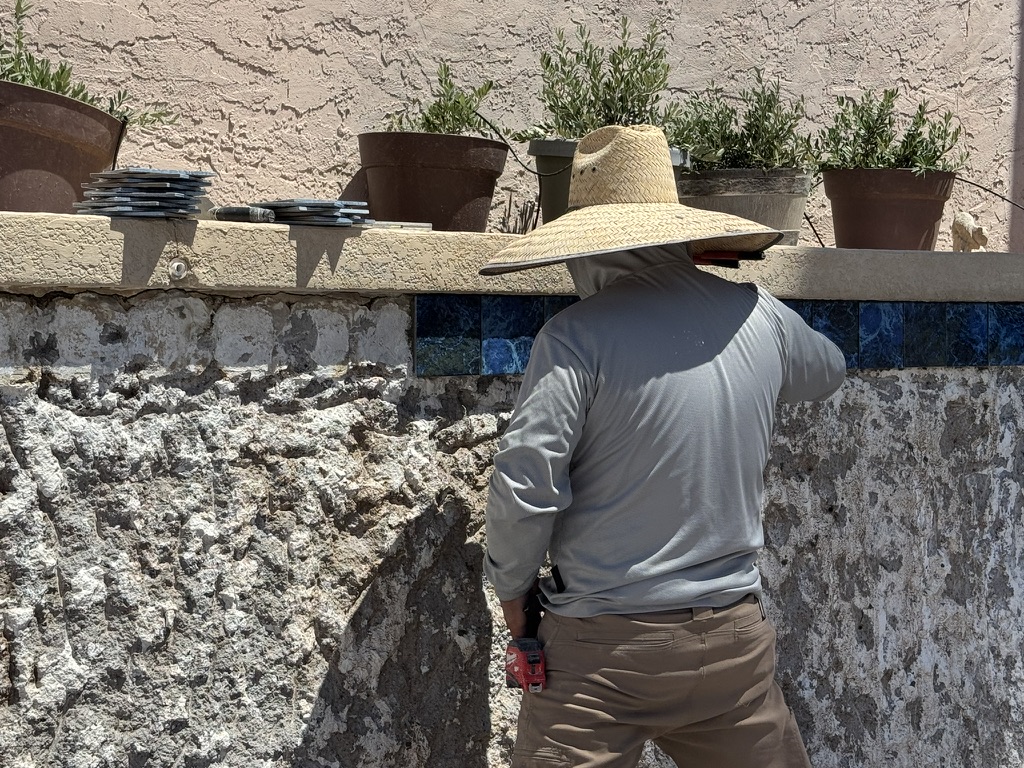
The next selected photos show the exposed pool during preparation and a mason installing blue waterline tile. A close view of the wall and tile helps show that waterline work is a distinct part of this documented project. It should not be assumed to be included in every resurfacing estimate.
Ask which surfaces will be prepared, whether tile or step work is included, and how any additional findings will be discussed before the scope changes. The answer should be specific to your pool and the finish chosen.
Installing the waterline tile
The mason installs the blue waterline tile in this project. Ask whether tile replacement is included in your proposal and how it relates to the new interior finish.
Follow the new interior through refilling
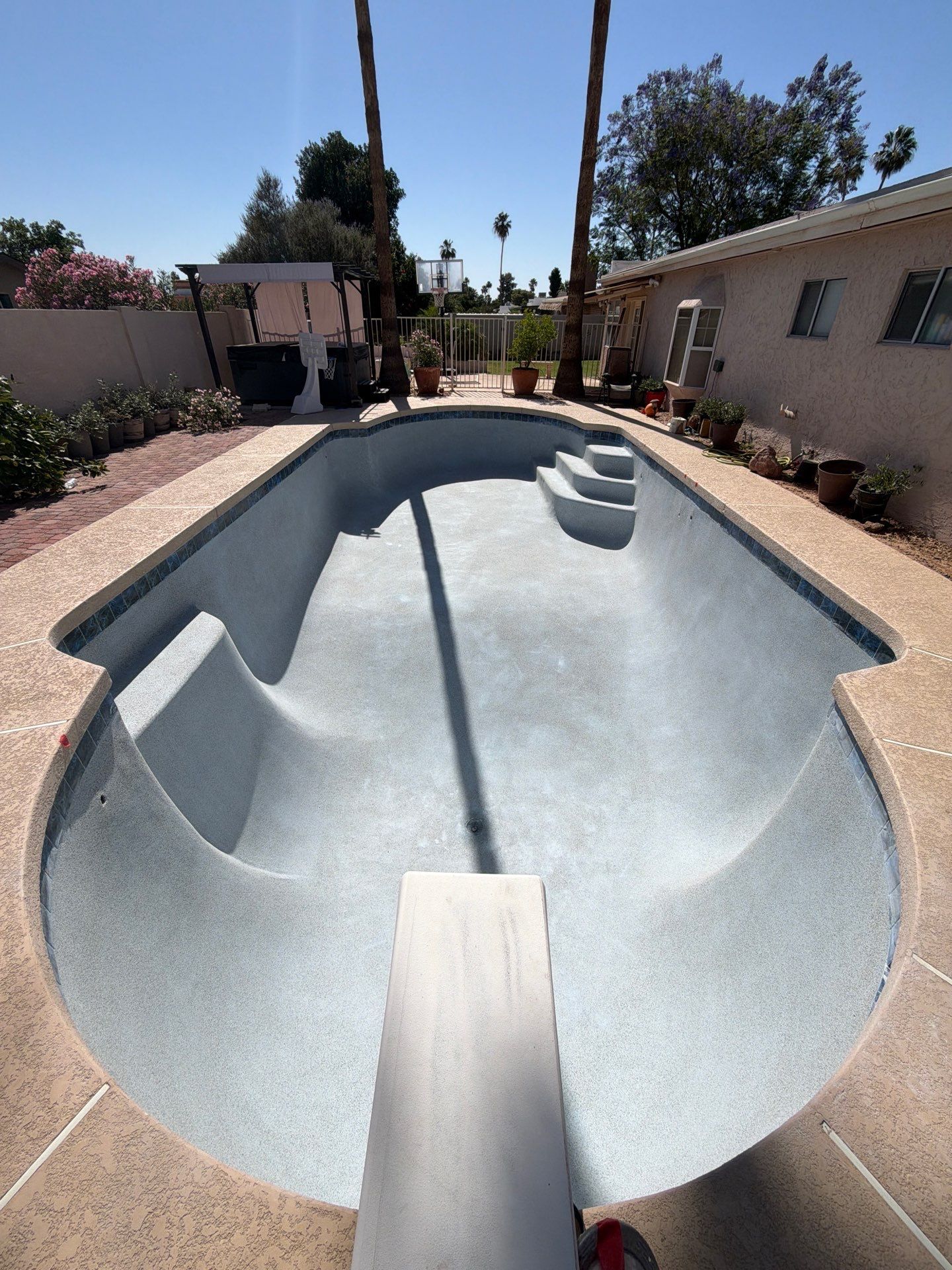
The newly surfaced pool is shown while it is still empty. The filled overview below returns to the same backyard seen at the start.
Ask your contractor what finish is specified, what to expect during startup, and what care instructions will be provided when the pool is handed back. Those details belong in the project documents for your property.
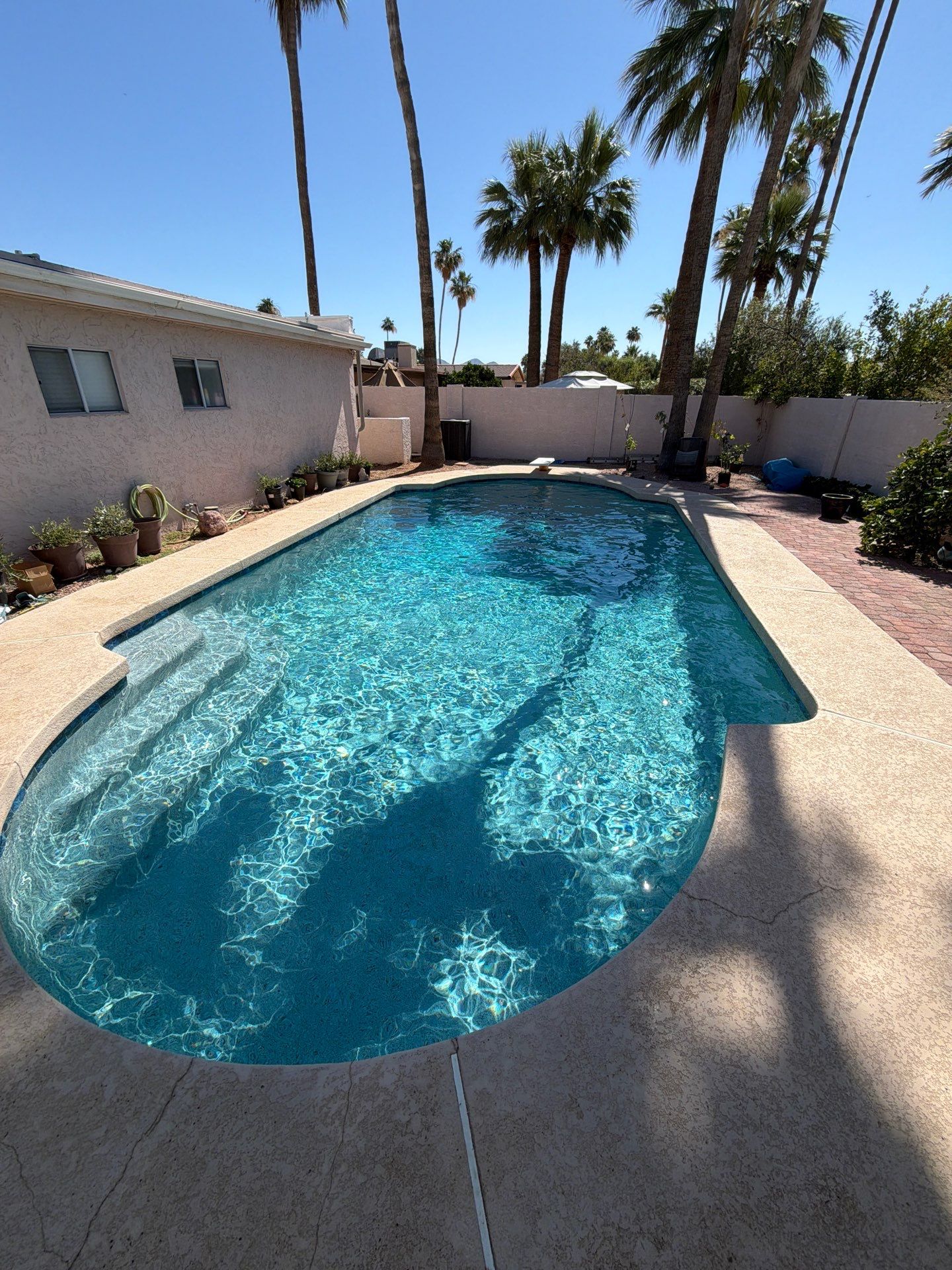
The filled result
The filled overview returns to the same backyard shown at the start. Confirm your finish-specific startup and ongoing care instructions with the contractor before returning to normal pool use.
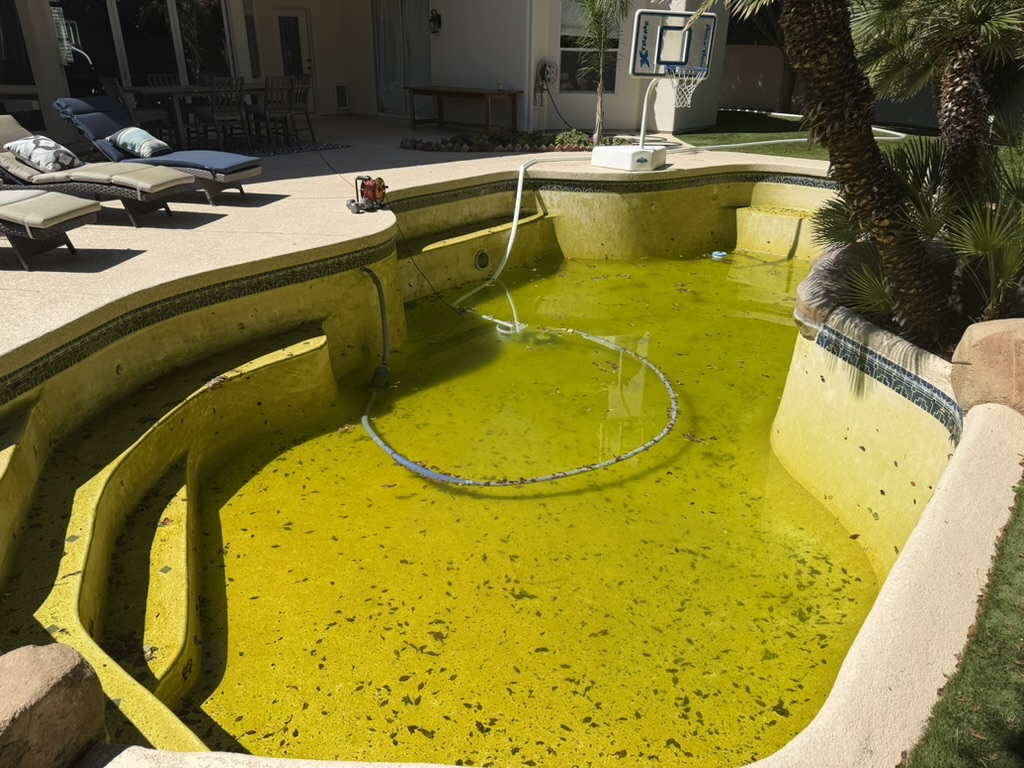
A second project's before and after
A separate Haoly Pools project shows another starting condition: green water and a worn pool interior. The following two photographs belong to this second property; the process sequence above belongs to the first.
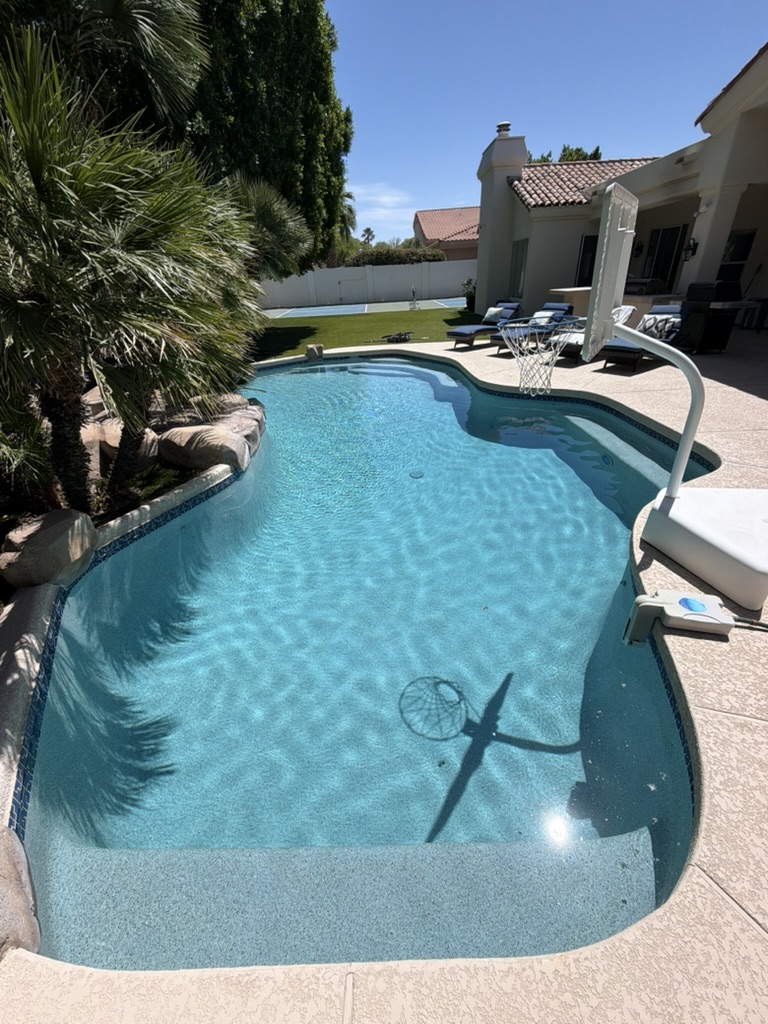
Project two: after resurfacing
The completed pool is shown filled, from a different angle. Ask about the assessment, removal, preparation and startup behind the finished result when discussing your own project.
Talk through your pool's next step
Tell Haoly Pools what concerns you about your current surface and what you hope to change. Share dated photos and any previous repair history. An on-site conversation can turn those observations into a project-specific scope. You can also see the full resurfacing service gallery or request a project conversation.
Does every resurfacing project include chip-out?
The first project photographed here included chip-out. A contractor should explain the preparation proposed for your pool and why.
Is waterline tile automatically included?
The first project shows waterline tile work. Whether tile is included in your project belongs in the written scope.
How long does the process take in Phoenix or Scottsdale?
These photos show stages, not a universal timeline. The condition, finish, agreed scope, access and scheduling determine a project-specific estimate.
Updated
Sources & further reading
Have a question about this article? Contact the editorial team.
Our editorial approach